
Act 1 – The Threat
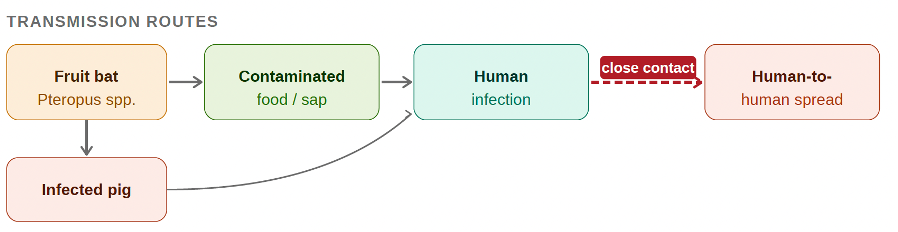
It began in the pig farms of Malaysia in 1998. Nipah virus is enveloped, single-stranded RNA virus in the paramyxovirus family, a WHO-priority zoonotic pathogen carried by fruit bats (Pteropus spp) that poses a serious threat to public health because of its high pathogenicity and zoonotic transmission potential. It moves from bats to humans through contaminated food, infected animals, or close contact with the sick, making it extraordinarily difficult to contain once it enters a densely populated healthcare setting. The disease progression is rapid. Fever and headache on day one. Seizures by day two. A fatality rate that sits between 40 and 70 percent. The incubation period typically ranges from 3 to 14 days, and in rare cases up to 45 days, a window wide enough to scatter cases across districts before a single diagnosis is confirmed. Despite this severity, no approved vaccines or antivirals exist (1-4).
Act 2 – The Pattern: A Virus That Keeps Coming Back
India’s Nipah story does not announce itself. It arrives quietly in a shared hospital ward, a cup of raw date palm sap, a fruit bat roosting in a familiar tree and by the time anyone notices, people are already sick. Although the bat reservoir is widely distributed across India, human cases have repeatedly emerged in only two states: West Bengal and Kerala two very different geographies, affected by the same virus.
The 2001 Siliguri outbreak remains a classic example of hospital-acquired infection, with around 75% of cases involving healthcare workers. Then came Kerala. In 2018, an outbreak struck over 1,800 km from previous sites, killing 21 of 23 infected. Recurring spillovers followed in 2019, 2021, 2023, 2024, and 2025.
In January 2026, West Bengal’s turn came again. Two healthcare workers in Barasat were confirmed – infected the probable source: a woman who had consumed raw date palm sap (6-8).
Act 3 – The Race: Transmission, Symptoms, and the Treatment Gap
Nipah spreads through bat feces, saliva, urine, contaminated food, infected animals, and close contact with infected humans. It begins with fever, headache, cough, and sore throat before escalating to brain swelling, seizures, and coma within 24–48 hours. Some survivors develop relapsing encephalitis months or years later.
Early symptoms mimic influenza, making differentiation extremely difficult. Diagnosis relies on RT-PCR in specialized laboratories not routinely available in most facilities, costing critical hours of unprotected exposure.
No approved treatment exists. The treatment gap is equally alarming. Therapeutic candidates under investigation include the monoclonal antibody m102.4 in Phase I trials, repurposed antivirals such as remdesivir and favipiravir, and host-targeted approaches. Vaccine candidates in clinical trials include ChAdOx1 Nipah B (Phase II), PHV02, and Moderna and NIAID’s mRNA-1215, all targeting the viral glycoproteins required for host cell entry. Encouragingly, research has accelerated sharply since 2018, with patent activity growing nearly fourfold between 2021 and 2025. But for patients in an ICU in Kerala or West Bengal today, supportive care remains the only option (9-11).
Act 4 – The Warning: Rethinking India’s Preparedness
India has learned to respond. It has not yet learned to anticipate. Habitat fragmentation, peri-urban expansion, and intensified agriculture are increasing human-bat contact, yet environmental surveillance is not effectively integrated into India’s monitoring systems.
Nipah is not Kerala’s problem, or West Bengal’s. It is a national vulnerability. The virus will return. The question is whether India will be ready (12-13).

REFERENCES